Tuesday, September 4, 2012
MBA FINANCE : MBA FINANCE : Money Market v/s Capital Market
MBA FINANCE : MBA FINANCE : Money Market v/s Capital Market: MBA FINANCE : Money Market v/s Capital Market : Difference between Money Market and Capital Market The relat...

MBA FINANCE : Financial System
MBA FINANCE : Financial System: Introduction: Economic growth and development of any country depends upon a well-knit financial system. Financial system...
MBA FINANCE : Strategic Management
MBA FINANCE : Strategic Management: What is Strategic Management? Discus the need and characteristics of Strategic Management. Strategic Management consists of analys...
MBA FINANCE : Money Market v/s Capital Market
MBA FINANCE : Money Market v/s Capital Market: Difference between Money Market and Capital Market The relationship between the money market and capital ma...
Monday, September 3, 2012
Strategic Management
What is Strategic Management? Discus the need and characteristics of Strategic Management.
Definitions
Strategy is a central understanding of the strategic management process.
Strategy is the determination of basic long-term goals and objectives of an organisation.
Determining the courses of action to attain the predetermined goals and objectives.
Identify factors in the political and social environment that requires careful monitoring.
Allocating the necessary resources for implementing the course of action.
Set a clear direction.
Enterprise knows its strengths, and weakness compared with those of its competitors.
The competitive firm should have a rational, clear-headed notion purged of wishful thinking of its mission, its external competitive environment, and its internal capabilities.
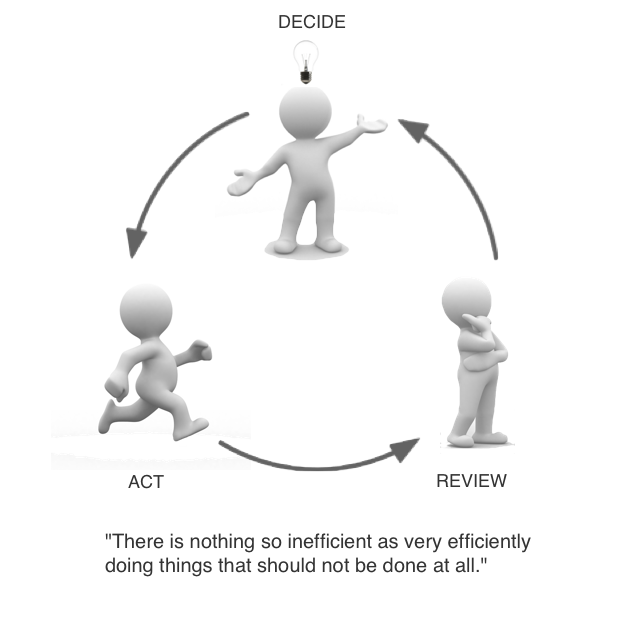
Needs
To develop measures to judge whether a particular opportunity is a rare one or whether much better ones are likely to develop in the future.
To utilize the delay principles that is delay the commitment until and opportunity is on hand.
To have rules to guide the search for new opportunities both inside and outside of the firm.
To identify develop and exploit potential opportunities.
To save time, money and executive talent.
To have an assurance that the firm's overall resource allocation pattern is efficient.
Characteristics
Reference :Strategic management ensure that strategic is put into action,implementation is done through action plans.
Long-term implication :Strategic management is not concerned with day-to-day operation.It has long-term implications.It deal with vision,mission and objective.
Uncertain :Strategic management deals with future-oriented non-routine situation.They create uncertainly.Managers are unaware about the consequences of their decisions.
Fundamental :Strategic management is fundamental for improving the long-term performance of the organization.
Complex :Uncertainly brings complexity for strategic management.Managers face environment which is difficult to comprehend.External and internal environment is analysed.
8P's of Service Management
Integrated Service Management & Eight Components or 8P's of Service Management
Service Marketing derives its concepts and applications from several important areas of management like organizational theory, economics, quality management, human resource management, operation management, marketing and other business practices, service management is meant to attain certain objectives.
Objectives
To understand how total quality is perceived by the customer while using or consuming a certain offering which might be purely service or a combination of service and a tangible goods, that is to understand the utility itself and how services or its combination contribute to this utility which ultimately affects customer relationship and changes which takes place over time.
To ensure functioning of the organization so that the required utility or quality is achieved and the objectives of the parties involved are met.
To understand how the organization should be managed and developed so that the desired utility or quality is achieved.
Key elements or Characteristics
It is an overall management perspective, which should guide decisions in all areas of management.
Managing quality is an integral part of service management.
It is customer driven or market driven
Internal development of the personnel and reinforcement of its commitment to company goals and strategies are prerequisites for success.
8P's of Service Management
Product and Element
What is the product, what
comes packaged with it, what need does it fulfill? Obviously, this is the
central point of your marketing, but are you marketing a single product or your
whole company’s range of stock or services. This needs to be pinned down first
before any further planning can be decided upon.
Place and Time
Tells the customer timescales, how long it get a item or complete a job, where you located can impact the customer relationship, as can be method of delivery of goods. Speed is essential in the modern world, but people wait for the quality of the good, if they know why they are waiting for that's worth waiting for.
Process
Successful companies have a strong work processes upholding good quality of service. A poor process will leads to a poor user experience, and negative exposure to. Showing potential customer this strength as a marketing strategy creating trust, and suggests a good user experience which will, hopefully,only be reinforced by their actual experience.
People
Customers judges the quality of the service they receive based on the assessment of the nature of interaction taking place between them and service employees. The nature of theses interactions strongly influences the customers perception of the service quality. front line staff strongly impacts the perception and experience of the customer. They are the face of the company.

Productivity and Quality
Productivity relates to how inputs are transformed into outputs that the valued by customers whereas quality refers to the degree to which a service satisfies customers by meeting their needs, wants and expectation.Both these elements are strategically inter-related and must be treated collectively. The customer look for the best quality with the best supply best product and the procured fairly at the lower cost.
Physical Evidence
The environment surrounding a business can have a huge impact on people perceptions.
well maintained, clean and pleasant workplaces or organized help to the efficient view of your service.
Promotion and Education
This component plays a lead role.Promotion and Education - speaks for itself, but the marketer must make sure communications not only provide information, but also persuade the customer of the service's relevance to the customer's particular 'problem'.
Productivity and Quality
Improving productivity is a requisite in cost management; but quality, as defined by the customer, is essential for a service to differentiate itself from other providers.
Tells the customer timescales, how long it get a item or complete a job, where you located can impact the customer relationship, as can be method of delivery of goods. Speed is essential in the modern world, but people wait for the quality of the good, if they know why they are waiting for that's worth waiting for.
Process
Successful companies have a strong work processes upholding good quality of service. A poor process will leads to a poor user experience, and negative exposure to. Showing potential customer this strength as a marketing strategy creating trust, and suggests a good user experience which will, hopefully,only be reinforced by their actual experience.
People
Customers judges the quality of the service they receive based on the assessment of the nature of interaction taking place between them and service employees. The nature of theses interactions strongly influences the customers perception of the service quality. front line staff strongly impacts the perception and experience of the customer. They are the face of the company.
Productivity and Quality
Productivity relates to how inputs are transformed into outputs that the valued by customers whereas quality refers to the degree to which a service satisfies customers by meeting their needs, wants and expectation.Both these elements are strategically inter-related and must be treated collectively. The customer look for the best quality with the best supply best product and the procured fairly at the lower cost.
Physical Evidence
The environment surrounding a business can have a huge impact on people perceptions.
well maintained, clean and pleasant workplaces or organized help to the efficient view of your service.
Promotion and Education
This component plays a lead role.Promotion and Education - speaks for itself, but the marketer must make sure communications not only provide information, but also persuade the customer of the service's relevance to the customer's particular 'problem'.
Productivity and Quality
Improving productivity is a requisite in cost management; but quality, as defined by the customer, is essential for a service to differentiate itself from other providers.
Sunday, September 2, 2012
Scope, concepts and 4I's of Service Marketing
Scope, concepts and 4I's of Service Good and Service Categorization
Introduction
The world economy nowadays is increasingly characterized as a service economy. This is primarily due to the increasing importance and share of the service sector in the economies of most developed and developing countries. In fact, the growth of the service sector has long been considered as indicative of a country’s economic progress.
Economic history tells us that all developing nations have invariably experienced a shift from agriculture to industry and then to the service sector as the main stay of the economy.
This shift has also brought about a change in the definition of goods and services themselves. No longer are goods considered separate from services. Rather, services now increasingly represent an integral part of the product and this interconnectedness of goods and services is represented on a goods-services continuum.
Definitions
"Service is an identifiable, intangible activity that is the main object of a transaction designed to provide want of satisfaction to the customers"
Service include " All economic activities whose output is not a physical product or construction, is generally consumed at the time it is produced and provides added value in forms (such as convenience, amusement, timeliness, comfort or health) that are essentially concerns of its first purchaser.
The American marketing association defines services are " Service are activities, benefits or satisfaction which are offered for sale and provided in connection with the sale of goods".
Service are "Economic activities that produce time, place, form and psychological utilities".
Concept
The core offerings of hospitals, hotels, banks, public utility services transportation services etc. comprise primarily deeds and actions performed for the customers, such action or deeds or performance are referred to as services.
V.A.Zeithaml. describes service as "Deeds processes and performances".
4I's of Service Good and Service Categorization
Intangibility
Services are inherently experiential. They will typically involve some sort of accompanying product, also known as the facilitating good; however, the primary value to the consumer is intangible
Inconsistency
Service delivery is prone to inconsistency. The most successful service brands will often invest heavily in training and quality control programs in an attempt to reduce inconsistency.
Inseparability
In addition to being intangible, a service is also inherently inseparable from the service delivery vehicle. It involves a necessary ‘touch point’ with the customer that is necessarily linked to the service itself.
Inventory
Although services may be linked to a facilitating good, inventory associated with a service is perishable.
Subscribe to:
Comments (Atom)